
Introduction:
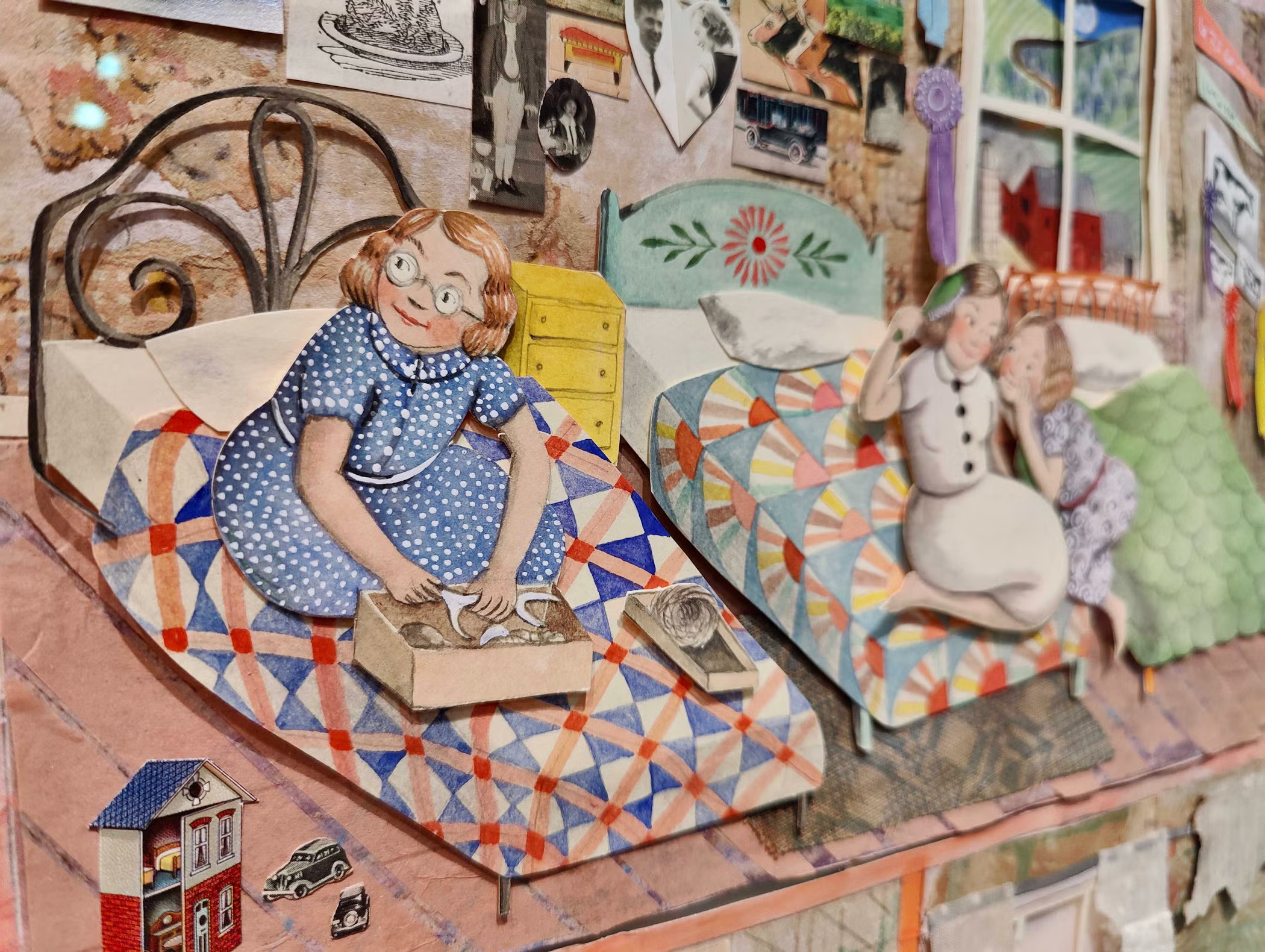
Creative illustration is super important in kids’ books, shaping how young readers dive into stories and grow a love for reading. But here’s the thing – illustrations aren’t just decoration, right? They’re what makes the story breathe. They help kids understand, imagine, and even feel things deeply. Ever stopped to think why that matters?
Visual Storytelling and Engagement:
Let’s be real – pictures tell half the story in children’s books. They grab kids’ attention first, right? Bright, bold images pull readers into the plot, especially for little ones still figuring out words. The pictures give clues – like a roadmap – so kids can follow along even if the text feels tricky. And when words and images work together? Makes the whole story stick in their minds longer, you know? Like that one book you still remember from childhood…
Stimulating Imagination and Creativity:
Good illustrations don’t just show a world – they kickstart a kid’s own creativity. Crazy landscapes, talking animals, wild adventures… these visuals get kids filling in the gaps with their own ideas – like adding extra scenes in their heads. It’s not just about fun, though. That mental playtime actually helps them think critically. Who knew doodles could do all that?
Emotional Resonance and Empathy:
Pictures have this sneaky way of showing feelings. A character’s slumped shoulders, rainbow-bright colors versus gloomy grays… kids pick up on that stuff. They start connecting with the joy, fear, or bravery on the page. And that connection? It’s like empathy training wheels. Seriously, have you ever seen a kid argue with a picture that made them feel something?
Cultural Representation and Diversity:
Including diverse illustrations isn’t just nice to have – it’s crucial. When books show real cultural details – clothing, festivals, homes – it does two things. It tells some kids, “Hey, you belong here,” and shows others, “Look how cool different can be.” Think about it – when was the last time you saw a picture book that really nailed showing different traditions? That stuff sticks.
Encouraging Language Development:
Here’s a twist – pictures actually help kids pick up language faster. Books with repetitive phrases paired with matching images? They’re like cheat codes for linking words to meanings. A kid sees a picture of a “gigantic” dinosaur next to the word, and suddenly… ohhh, that’s what gigantic means! That’s how you build real reading skills from the ground up.
Interactive and Multisensory Learning:
Modern kids’ books aren’t just for staring at. Flaps to lift, fuzzy patches to touch, pop-ups that jump out – it turns reading into a full-body experience. This isn’t just gimmicky. All that poking and prodding? It wires their brains to engage deeper with stories. Who knew reading could be this hands-on?
Influence on Marketability and Appeal:
Let’s not kid ourselves – illustrations make or break a children’s book in stores. Bold covers scream “Pick me!” from shelves, while unique art styles make parents go, “This feels special.” And guess what? That first visual hook often decides whether a book gathers dust or becomes a bedtime favorite. Funny how pictures can be that powerful, isn’t it?
Conclusion:
At the end of the day, illustrations aren’t just the icing on a kids’ book – they’re the flour in the cake. They pull readers in, stretch imaginations, teach feelings, and whisper, “The world’s bigger than you think.” As publishing changes, one thing stays true: stories with killer pictures don’t just entertain kids. They shape how they see life. And honestly? That’s worth every brushstroke.